Fifteenth Bonn Applied English Linguistics Conference (BAELc15)
Each year, the Bonn Applied English Linguistics group hosts a conference aimed specifically at postgraduate, PhD, and post-doc students. This conference allows young linguists to showcase their empirical research projects in all areas of Applied Linguistics broadly defined. BAELc15 is a great opportunity to learn from each other, get feedback on your work and network with other researchers in the field.
This year’s conference will focus on learner corpora, while maintaining its interdisciplinary orientation and openness to innovative topics across applied linguistics, alongside a specialized workshop dedicated to learner corpus research (see CfP below).
The 15th iteration of the BAEL conference will take place on Thursday, July 16th and Saturday, July 18th, 2026. The conference location is the IMPULSE – House for Intellectual Innovation and Creativity.
Dates
Thursday, July 16th 2026 to Saturday, July 18th 2026
Registration
Please email us at bael@uni-bonn.de if you would like to join the conference as a listener.
Location
IMPULSE – House for Intellectual Innovation and Creativity
Adenauerallee 131
53113 Bonn
Second Workshop on Studying the Language of Young Learners
Keynote Speakers

Prof. Detmar Meurers
University of Tübingen and Leibniz Institut für Wissensmedien (IWM)
Learning analytics meets corpus linguistics: Studying the learning process and products of young learners in school
While over 34 million children in secondary schools in Europe are learning English as L2 and 20 million children are learning more than one foreign language (Eurostat 2020/21), young learners in instructed formal education remain relatively understudied. Initially, Second
Language Acquisition (SLA) Research was heavily focused on uninstructed SLA and theorizing, before a focus on cognitive mechanisms resulted in experimental studies in the lab with college students as most readily available subjects. In recent years, Instructed SLA and the relevance of ecologically valid data are increasingly recognized,
but legal and practical issues make it difficult to stage interventions and collect data in schools at scale, and Long (1980) already pointed out the "black box problem" of school studies, where researchers typically can only obtain data from students and teachers
before and after some intervention, but the teaching and learning process actually happening in class are invisible.
The increasing use of digital learning contexts in schools provides some opportunities to look into this black box and collect data on both the process and product of learning and collect some individual difference measures. In this talk, we discuss the analysis of learning
traces from the Intelligent Tutoring System Feedbook used in several randomized controlled field studies fully integrating the system into regular classrooms throughout the school year. The system offers practice activities that are organized as pre-task activities accompanying a regular task-supported EFL classroom. We complement these learning process analyses with products from a writing task completed by the same students at the end of the school year to study whether the learning gains from deliberate practice of the language means required by the official school curriculum successfully transfer to free writing.
Prof. Emma Marsden
University of Oxford, Department of Education
Language learner data: Experiences of working with learners of French and Spanish in schools in England
Collecting, analysing, and sharing data from young, instructed language learners offers many rewards. But it also presents numerous challenges that can render school-based language learning a somewhat neglected domain for researchers. In this talk, I will discuss some of highs and lows of such endeavors by describing the Components of Language Proficiency project (https://comlap.york.ac.uk; Dudley & Marsden, 2026), which collected data on knowledge and proficiency from 302 16-year-old learners of French and Spanish at secondary schools in England.
I start the talk with the policy-, context- and theory-related reasons that drove our research design, methods, analyses, and interpretations. I then provide a few key highlights of our findings about (1) knowledge (lexical, morphosyntactic, sound-symbol relations), (2) proficiency (reading, inferencing, listening, writing, and speaking), and (3) correlational-based relations between knowledge and proficiency, taking a skill acquisition theoretical perspective on development. I will discuss some of the challenges we encountered, which illustrate inherent tensions between internal and external validity and also reflect potential ‘conflicts’ between, on the one hand, ethical considerations and, on the other hand, our aspirations for sampling and open scholarship.
References
Dudley, A. & Marsden, E. (in press). Components of language proficiency: Adolescent modern language learners in England. Multilingual Matters
Marsden, E. & Hawkes, R. (2026) A narrative account of experiences at research-policy-practice interfaces in England—warts and all. Studies in Second Language Learning and Teaching. Post-print
Marsden, E. & Hawkes, R. (2024) Balancing evidence-informed language policy and pragmatic considerations: Lessons from the MFL GCSE reforms in England: Language, Society, and Policy.
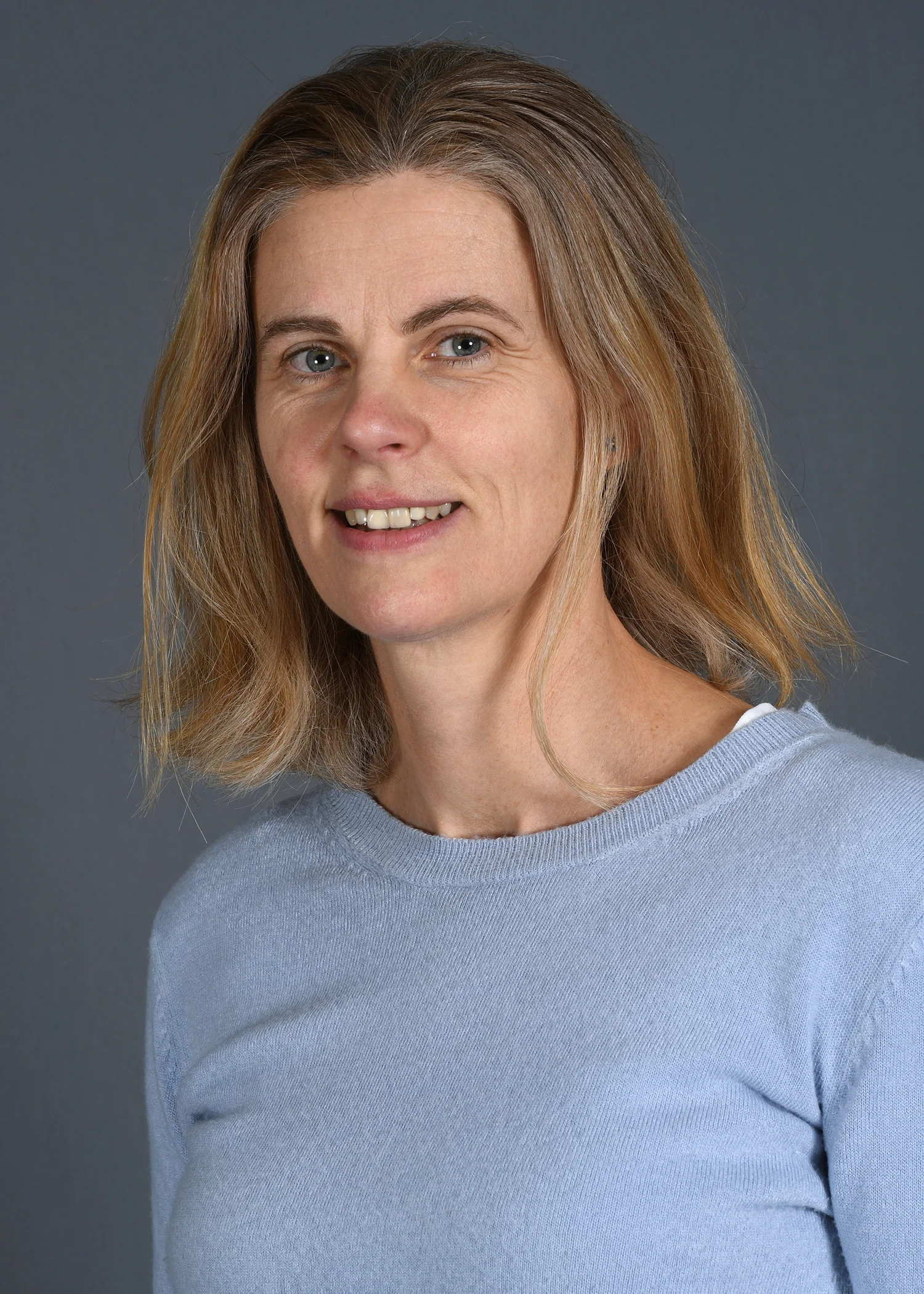
Organizer

Prof. Dr. Robert Fuchs