Fourth European Symposium in Celtic Studies 2025
From 27 to 29 August 2025, the Department of Celtic Studies at the Institute of English, American and Celtic Studies hosted the Fourth European Symposium in Celtic Studies, organized on behalf of the Societas Celtologica Europaea. The symposium brought together over 50 colleagues from Ireland, Great Britain, Italy, Poland, the Netherlands, Sweden, Canada, as well as Switzerland, Austria, and Germany to discuss current topics in the multifaceted field of Celtic Studies.
The opening ceremony featured warm words of welcome from distinguished guests who clearly demonstrated the international significance of Celtic Studies. We are deeply grateful to Prof. Dr. Stefan Conermann, Dean of the Faculty of Arts at the University of Bonn, for his opening address, which emphasized the university’s commitment to supporting Kleinfächer during challenging times. Andrew Tyrrell from the Embassy of Ireland in Berlin and Katie Hill from the Government of Wales Germany Office also enriched the opening ceremony, underlining the importance of Celtic Studies and the strong ties between academic institutions and the Celtic nations.
The Symposiumʼs academic programme showcased the remarkable breadth and vitality of contemporary Celtic Studies. Three keynote lectures provided particular highlights. Dr Marion Löffler from Cardiff University opened the symposium with her thought-provoking talk on ʻDecolonising Celtic Histories: Religion, Nation and Place in Walesʼ, offering new perspectives on Welsh historical narratives. Dr Christian Schweizer from the University of Galway, winner of the 2024 Johann-Kaspar-Zeuss-Prize for his doctoral thesis, presented ʻThe Legacy of the Irish Scholar Dicuilʼ, illuminating the global character of medieval studies. The symposium concluded with Dr Erin McNulty from the University of Edinburgh, a 2024 prize winner for her article, speaking on ʻThe Re-Birth of a Language: Structural Variation in Manxʼ, demonstrating the productivity of modern sociolinguistic approaches in Celtic Studies.
The academic sessions covered an impressive temporal and methodological range, from antiquity through the medieval period to early modern times and the present day. While Irish and Welsh studies formed the core, as is usually the case in general Celtic Studies conferences, the program also featured papers on Continental Celtic, Scottish-Gaelic, and Breton studies. The presentations encompassed diverse approaches including history, linguistics, philosophy, digital humanities, and the full spectrum of philological methodologies.
We also made a foray into the future of Celtic Studies. The roundtable discussion ʻTeaching Celtic Studies: Why and What For?’ provided a forum for reflection on the discipline’s current state and its direction in the 21st century.
The General Meeting of the Societas Celtologica Europaea, held on 28 August, included the announcement of the 2025 Johann-Kaspar-Zeuss-Prize winners: the prize for the best PhD thesis in Celtic Studies was awarded to Dr Nina Cnockaert-Guillou for her thesis ʻCompilation and Creativity in Medieval Fíanaigecht: a Case-Study of ‘Three Men and the Dog of Irúath’’, accepted at the University of Cambridge and supervised by Prof. Dr Máire Ní Mhaonaigh. The prize for the best scholarly article by a pre-doc was awarded to Matthias Donners for his article ʻLepontische Inschriften aus dem Brembanatalʼ, published in Zeitschrift für celtische Philologie. Congratulations to both winners!
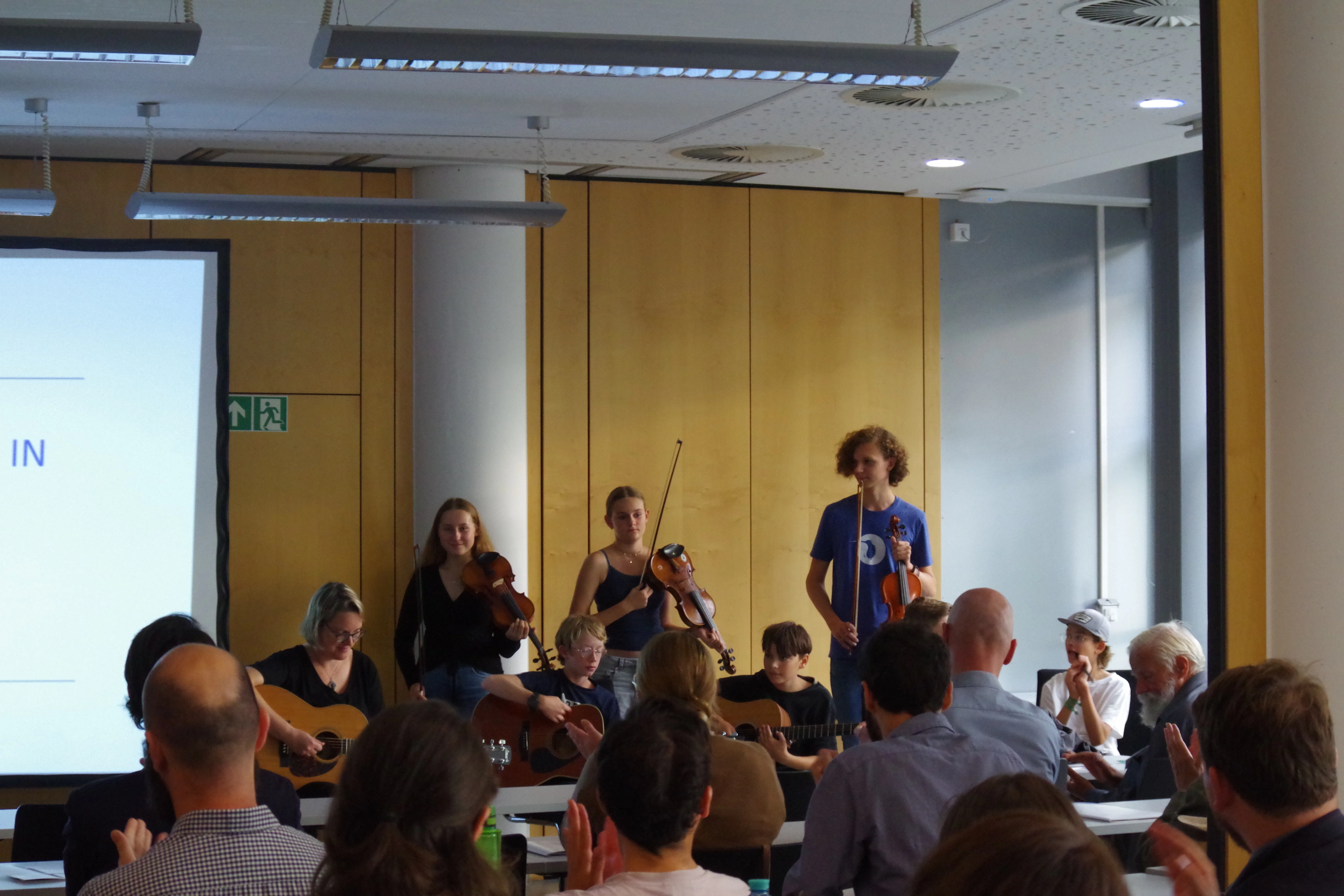
The symposium was a nice and warm gathering. The opening reception featured traditional Irish music performed by young musicians from the Ludwig-van-Beethoven-Musikschule Bonn under the direction of Sabrina Palm. A great team of students – Lucille Brünning, Paula Heger, and Alexa Hans (and Vera Trofimova) – under the guidance of Elisabeth Brendes and Jasper Kaufhold took care of the reception, all technical issues, as well as of abundant food and drinks. Irene Balles (thank you for all the pretty flower decorations!) and Dagmar Bronner also contributed massively to the conference’s smooth flow.
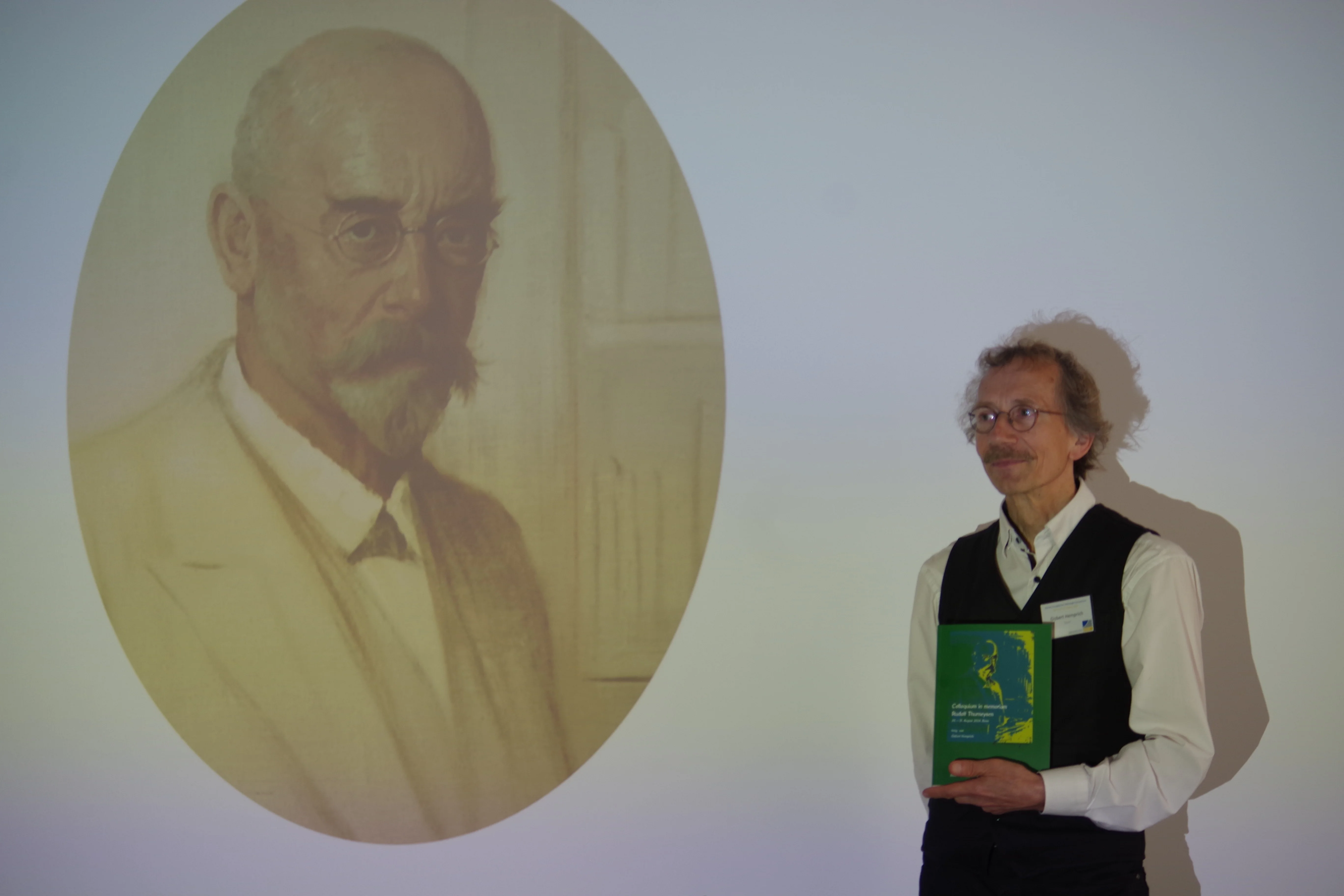
A particular joy was brought by the arrival of the volume resulting from the last year’s Colloquium in memoriam Rudolf Thurneysen, edited by Gisbert Hemprich at the curach bhán publications. Watch this space for more details on the volume – meanwhile, herzlichsten Dank an Gisbert für diese wunderbare Errungenschaft!
It was a great pleasure to see the vitality of the field in the variety of the topics, participants in the different stages of their academic careers discussing their research enthusiastically and supportively. Many thanks to all who came and made this symposium another milestone in the history of Celtic Studies at Bonn!
Elena Parina